Shared leads vs SEO: what a contractor gets from each
Shared leads vs SEO for contractors: how lead services split one homeowner among several bidders, what your own site brings, and how to compare the two.

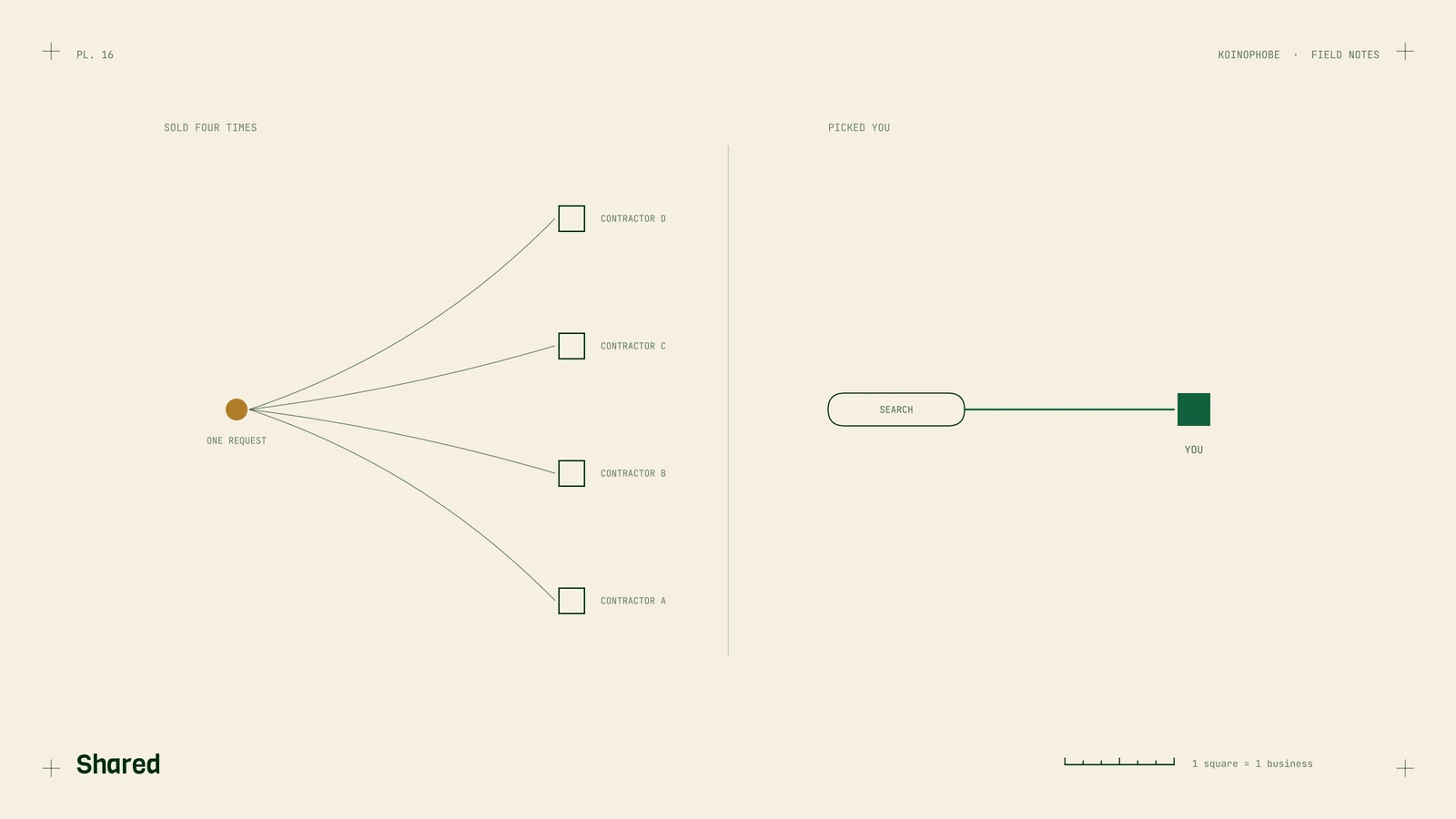
A shared lead is one homeowner's request, sold to more than one contractor. Someone fills out a form on a lead site asking for a roof quote or a pool deck estimate. The service passes that request to several companies in the area, and each of them pays for it. Then the homeowner's phone starts ringing, often from a few numbers in a row.
Shared leads can work for some contractors. Below is what you're paying for with them, and what the same money buys when it goes into your own website and Google Business Profile.
How a shared lead plays out
You're in a race from the second the lead lands. The contractor who calls first usually gets the first real conversation. The one who quotes lowest often gets the job. If you're up on a roof when the notification comes in, you may be calling back after others already have.

The homeowner filled in a form on a lead site, so they may not know your company name when you call, and some stop answering after a few calls from numbers they don't recognize. You still paid for the lead.
That's the model working as designed. The lead company's customer is you, and every extra contractor it sells the same request to is more revenue for it.
What your own site and Business Profile bring
A homeowner searches roof repair near me, finds your Business Profile or your service page, reads it and taps your number. That caller chose you. They might call one other company too, but they came in through your reviews and photos.
The data is yours as well. The call shows up in your own tracking. The form lands in your inbox. The customer goes on your list, and you can reach them again next year without paying anyone for the privilege.
An honest comparison
| Shared leads | Your own site and Business Profile | |
|---|---|---|
| How you pay | Per lead, for every lead | Monthly or one-time work on something you keep |
| Who else gets the homeowner | Usually several other contractors | Whoever else they choose to call |
| Time to work | Days | Months |
| When you stop paying | Leads stop | The site and profile stay yours |
| Who holds the data | The lead service first | You |
Speed is where shared leads win. Sign up today and you can have leads this week. SEO is slower. On a roofing site we work on, average position went from 47.9 to 14.9 when we compared October 2025 to August 2026 with the eleven months before. Impressions went from 5,410 to 139,639. Clicks went from 34 to 266, a smaller jump, because a lot of those new impressions were still on page two. That took most of a year of title rewrites, a page per town and schema work.
Cost per lead vs an asset
Cost per lead is easy to measure, which is why lead services sell on it. The number we'd watch is cost per booked job. If you buy ten leads and close one, that job cost you ten leads plus the hours spent chasing the other nine. Track that for three months before you decide anything.
SEO doesn't have a clean cost per lead in month one. It has a monthly cost and a slow curve. Our Care plan is $600 a month and Growth is $1,500 a month, and everything is listed on our pricing page. What you're paying for is pages and a Business Profile that keep working after the invoice is paid.
You can only judge either option if calls and forms are tracked. That's why phone click tracking in Tag Manager should go in before anything else, and why rankings mean little without tracking.
When shared leads make sense
If you're brand new, your calendar is empty next month and you don't have a site yet, shared leads can keep crews busy while you build something you own. If you're established and still buying leads out of habit, pull last quarter's numbers. Count how many of those leads turned into jobs and what you paid per job.
Running both is fine. Just record where each booked job came from, so you decide with job counts in front of you.
Where we'd start
Start by measuring. Set up calls and form fills as key events in GA4 (this note covers the three that matter), then let a month of data come in. If your site is getting impressions and no calls, that's often fixable. A Site Audit is $750 and is credited in full if a monthly plan starts within 30 days. If you'd like us to look at your site first, send it to us here and we'll reply the same business day.
Frequently asked questions
Are shared leads worth it for contractors?
They can fill a thin schedule, especially for a new business. The same homeowner usually goes to several contractors, so you compete on speed and price every time. Judge them by cost per booked job.
How long does SEO take for a contractor website?
Months. On a roofing site we work on, the big gains in search visibility came over about eleven months of steady work, and clicks grew more slowly than impressions.
Who owns the leads that come from my own website?
You do. The calls, form fills and customer list stay with your business. On our plans you also own every account, including Search Console, GA4 and the Business Profile.