Is SEO dead because of AI? What our data says
AI assistants mostly name companies that already rank on Google, they need crawlable pages to cite, and Google still sends the clicks. What changed, what didn't, and where a business owner should put the money.

"Is SEO dead?" gets asked every time search changes. It's being asked louder now, because customers type questions into ChatGPT and Google answers some searches with an AI summary.
We'd rather answer with numbers than opinions. Here's what we've measured.
What our data shows
In our September 2026 citation study, we asked ChatGPT, Claude, Perplexity and Google's AI Overviews twelve buyer questions and compared what they cited with Google's organic top ten for the same questions.
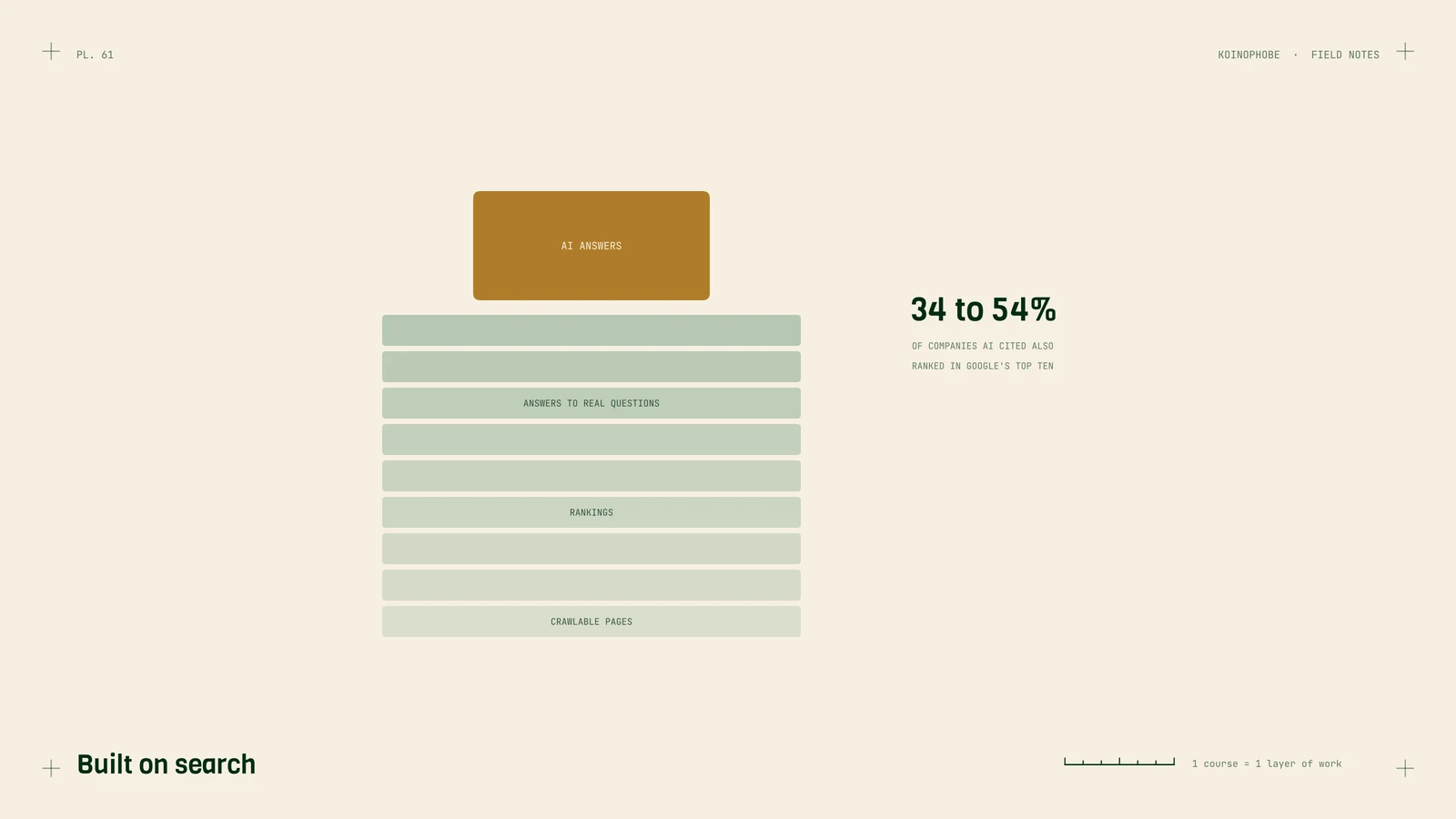
AI assistants mostly name companies that already rank. Between 34% and 54% of the companies each assistant cited were also in Google's top ten. They largely agree with Google about who is credible.
They need pages they can fetch. Every assistant we measured cited web pages it had crawled. A site blocked from crawlers, or empty until JavaScript runs, isn't in the pool.
They prefer pages that answer questions. Cited pages were article-shaped: guides, comparisons, roundups. That's what good SEO content has looked like for years.
So the foundation AI answers stand on is the same one SEO builds: crawlable pages, a company search engines recognize, and content that answers what people ask.
What did change
Some searches don't need a click anymore. Short factual questions get answered on the results page, by AI Overviews and featured snippets before them. On one agency site we work on, an article about the distance between two towns collected 87,354 impressions at a 0.13% click-through rate. That kind of traffic was always thin. Now it's thinner. AI Overviews and traffic drops.
There's a new place to be named. Customers asking ChatGPT for a recommendation is a new shelf. Getting on it needs two things SEO didn't use to cover: making sure AI crawlers can get in, and measuring the answers. What's new with GEO.
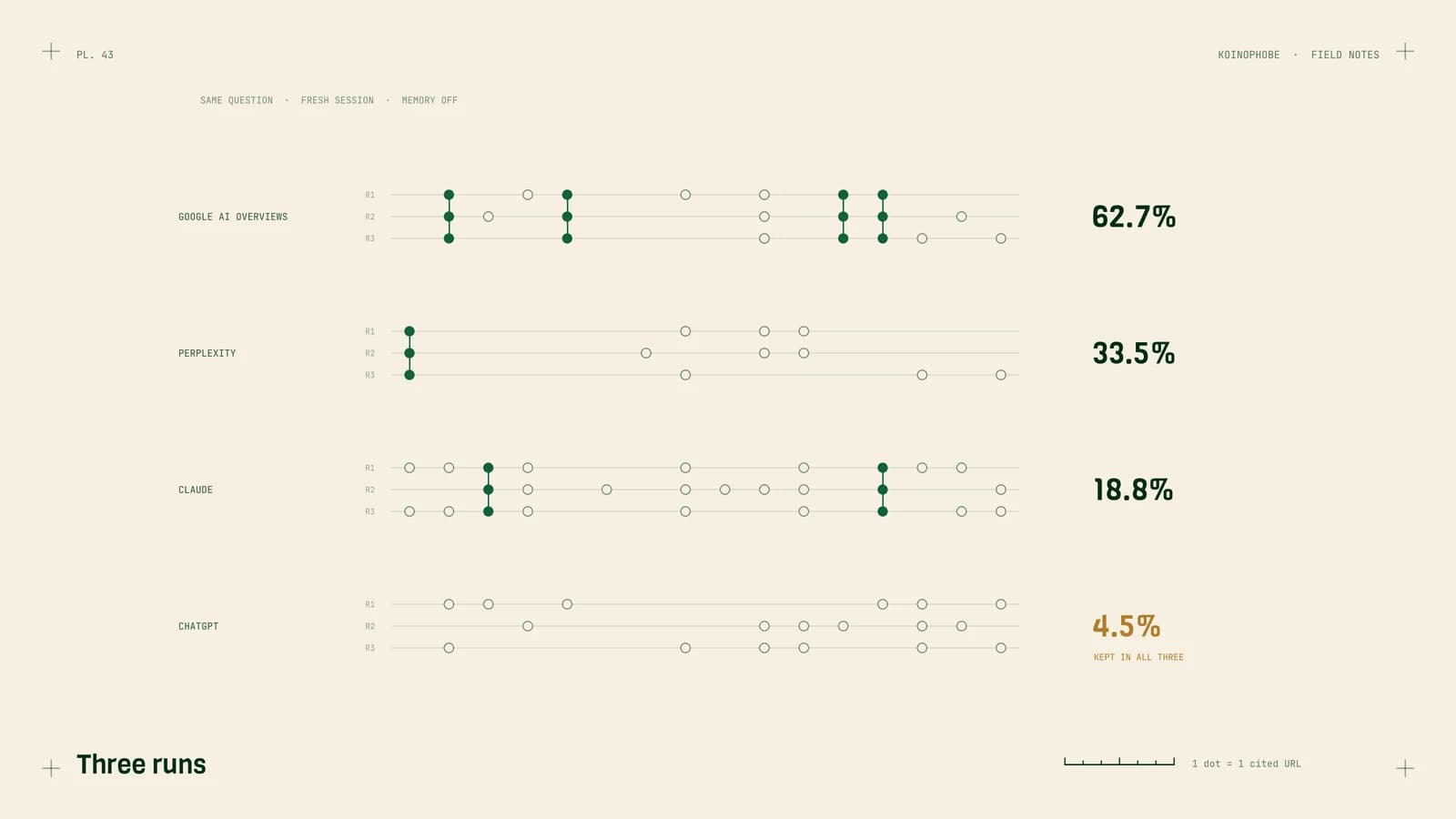
Results move more. Google rankings shift over weeks. ChatGPT's cited sources changed almost completely between three runs of the same question in our study; only 4.5% held. Measuring AI visibility takes repetition.
What didn't change
Google still sends the clicks. For most businesses, Google organic and Maps still bring far more visits than AI assistants; you can check yours with an AI channel in GA4. Google says AI Overview and AI Mode clicks are counted inside normal search traffic, and those features still link to sites.
New pages still get found fast when they answer something specific. On our own site, a note answering a definitional question went from nothing to around 200 impressions a day within two days of publishing, at an average position near 7. Search still rewards a page that answers a real question better than what's there.
Buying searches still need a website. "Emergency plumber near me," "book a dentist Saturday," "pricing," "quote." People still click, call and book. That's where most local and service businesses make their money.
Where to put the money
- SEO fundamentals first, if they're not done: crawlable site, fast pages, service and location pages, a complete Business Profile, tracked calls and forms.
- Add the AI pieces: check AI crawler access (the free check takes ten seconds), and track your key questions across assistants monthly with repeated runs.
- Shift content toward questions with stakes: costs, comparisons, "is it worth it," what to expect. Those pages win clicks on Google and citations in AI answers. Content that AI cites.
- Get talked about elsewhere. Reviews, listings, press, roundups. Recognition is what assistants draw on. Brand mentions.
The short answer
SEO isn't dead. The informational-traffic part of it is shrinking, the customer-winning part isn't, and AI answers are built on top of the same foundation.
Next steps
Look at where your customers come from today: Google organic, Maps, referrals, AI assistants. Put your effort where the customers are, and add AI tracking so you see the shift when it comes.
Our AI search optimization service covers both: the SEO foundation and the AI additions, tracked monthly, for $1,000 a month with no contract. Home service businesses can also see the local plans on our pricing page.
Frequently asked questions
Is SEO dead in 2026?
No. AI assistants still need to crawl pages to cite them, and in our September 2026 study between 34% and 54% of the companies they cited also ranked in Google's top ten for the same question. What changed is that some informational searches get answered on the results page, so the value shifts toward pages that win customers.
Should I stop investing in SEO and focus on AI?
For most businesses, no. The work that helps you rank on Google is most of the work that gets you named by assistants. Add the AI-specific pieces, crawler access and answer tracking, on top of it.
Will AI replace Google search?
Nobody knows. Google has put AI into search itself with AI Overviews and AI Mode, and those still link to websites. Whichever way it goes, the businesses assistants recommend are mostly the ones the web already recognizes.