Moving company SEO: local moves, long-distance routes and the trust problem
Moving is a trade where customers expect to be scammed, so trust does as much work as rankings. How we'd set up a mover's site: local town pages, long-distance routes that aren't doorway pages, the federal ad rule most sites miss, estimate pages and timing for the summer rush.

People choosing a mover are worried before they search. They've heard about held-hostage furniture and quotes that doubled on moving day. So a mover's site has two jobs: rank for the searches, and convince a nervous person you're one of the honest ones.
Moving isn't a trade we've worked in. Most of our sites are roofing, pool deck, lawn and shutter companies. The search setup carries over, though, so this is how we'd build it, with the moving-specific rules checked against the federal sources.
Pages for each kind of move
- Local moving, with a page for each main town you serve. Say what a typical local move costs, how you price it (by the hour, by crew size), and how quickly you can book.
- Long-distance or interstate moving. How you quote, how long delivery windows run, whether you use your own trucks or partner carriers.
- Packing and unpacking, as its own service with its own price.
- Storage, if you offer it.
- Specialty moves: pianos, safes, senior moves, offices. Only the ones you want more of.
Each page needs the service and town in the title tag, a quote button near the top, and the questions people ask you on the phone.
Long-distance route pages, carefully
"Movers from Boston to Florida" is a real search, and route pages can catch it. They can also turn into hundreds of near-identical pages with two city names swapped. Google's doorway abuse policy names "pages targeted at specific regions or cities that funnel users to one page" as an example.
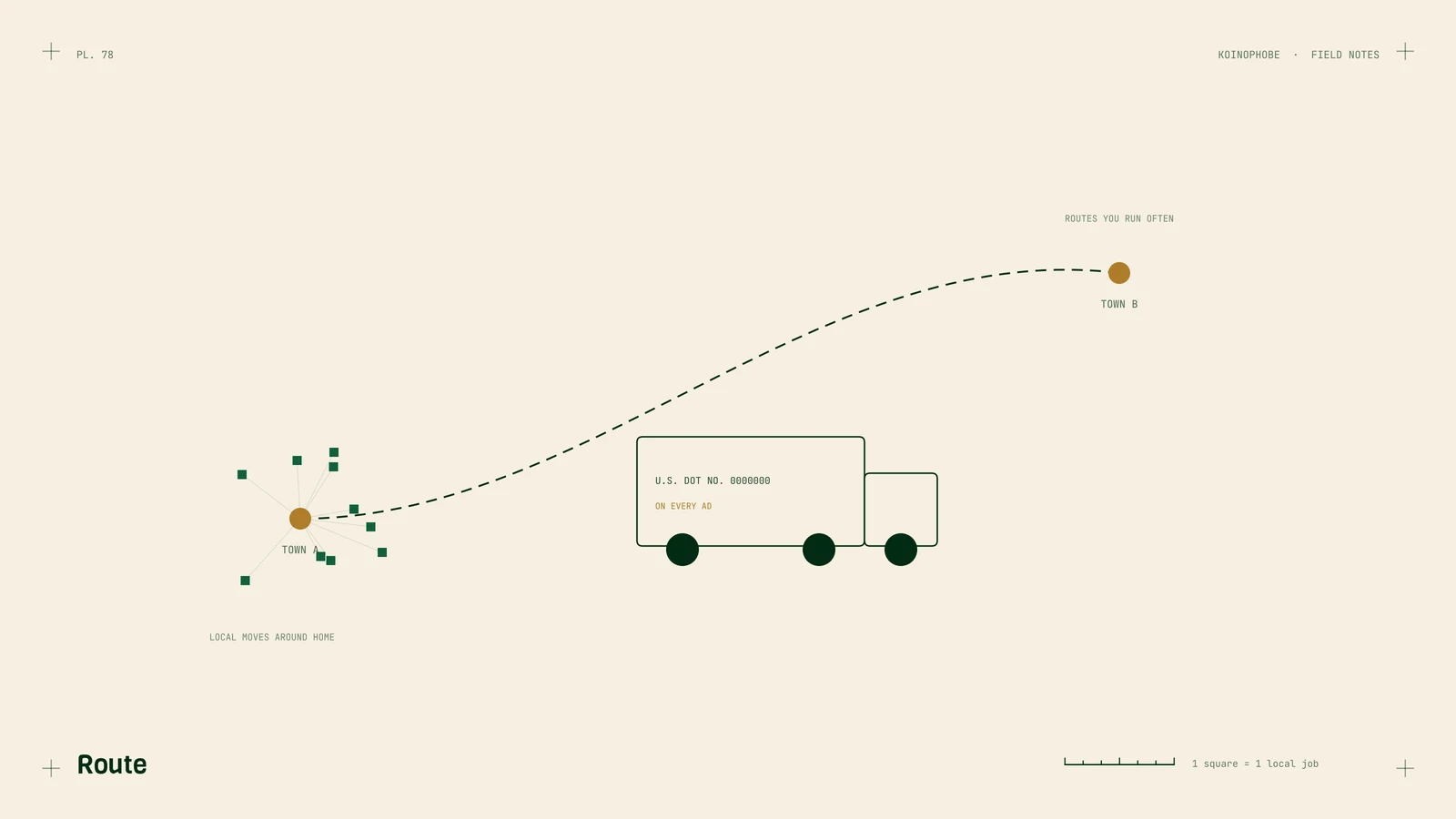
Build route pages only for routes you run often, and put something on each that only you would know: drive time, the delivery window you quote, a price range from recent moves, and a short story about a move you did on that route.

The federal rule most sites miss
If you move household goods across state lines, federal rules at 49 CFR 375.207 say every advertisement must include your name as it appears on your USDOT registration and your USDOT number, displayed as "U.S. DOT No." followed by the number. Put it in your site's footer so it's on every page.
It also helps with trust. FMCSA runs a public search where customers can look up a mover by name, USDOT number or MC number and see its registration and complaint history, and its consumer pages tell people to check before they hire. Make it easy: show the number, and link to the lookup.
If you only do moves within your state, check your state's licensing rules and show your state license number the same way.
An estimates page
The biggest fear in moving is the price changing. A page that explains how you estimate, in plain language, answers it:
- Whether you do in-home or video surveys.
- What's included and what costs extra: stairs, long carries, packing materials, a shuttle truck.
- For interstate moves, the difference between binding and non-binding estimates, which are terms the federal rules use.
- When and how customers pay.
People searching "how much do movers cost" are close to booking. A page that gives real ranges can rank for those searches.
Business Profile and reviews
Use Moving company as your primary category. If customers don't visit your office, hide the address and set service areas. Service area businesses on Google explains how, and choosing categories covers the rest.
Ask every customer for a review the day after the move, the same way each time, with a direct link. Google prohibits incentives for reviews. In a trade where people read reviews closely, reply to the bad ones with specifics and a fix.
Timing for peak season
Summer is the busy season for most movers, and new pages take weeks or months to be indexed and settle. Have your pages live and updated by spring. Check Search Console's Performance report against the same months last year to see when your searches rise.
Track quote requests
Make each quote request a key event in GA4, whether it's a form, a phone tap or a booking tool, and test the form monthly. Call tracking for contractors shows how to keep each source separate.
Where to start
Add your USDOT number to the footer today. Then write the estimates page and your main local moving page. If you'd like the site handled, our plans and what they include are on the pricing page.
Frequently asked questions
How do moving companies get more customers from Google?
Build a page for each kind of move you do and each main town you serve, publish clear information about estimates and pricing, show your USDOT number and insurance, collect reviews from every customer, and have pages live well before the summer peak.
Do movers have to show their USDOT number on their website?
Federal rules at 49 CFR 375.207 require interstate household goods movers to include their name and USDOT number in every advertisement, in the form 'U.S. DOT No.' followed by the number. Putting it in your site's footer covers every page.
Should a moving company make a page for every city-to-city route?
Only for routes you run often and can say something specific about. Hundreds of near-identical route pages with the city names swapped fall under Google's doorway abuse policy. A handful of real route pages with trip times, typical costs and past moves will do better.